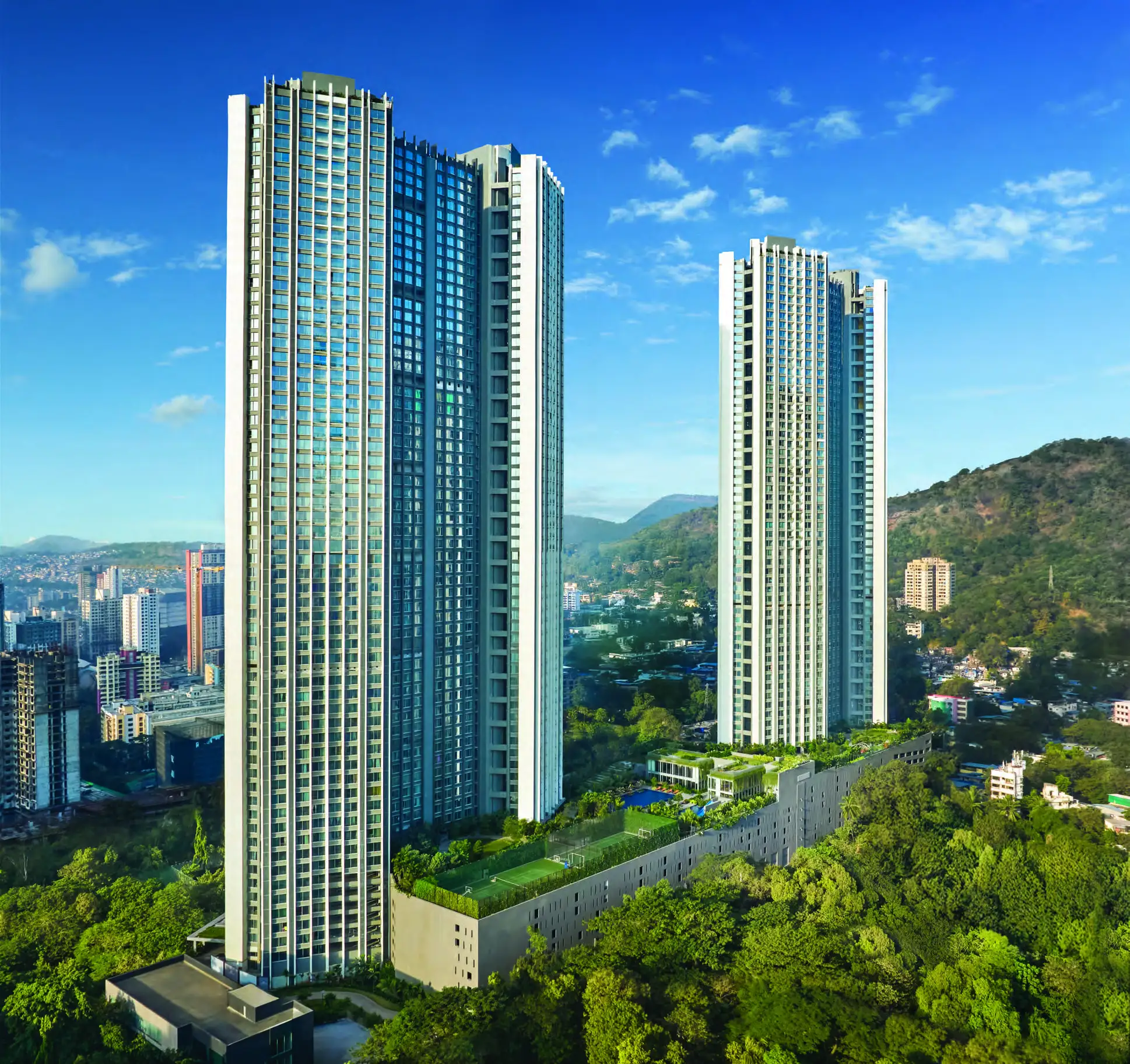


Dwarka Expressway: Complete History, Route Map, Key Cities & Current Status
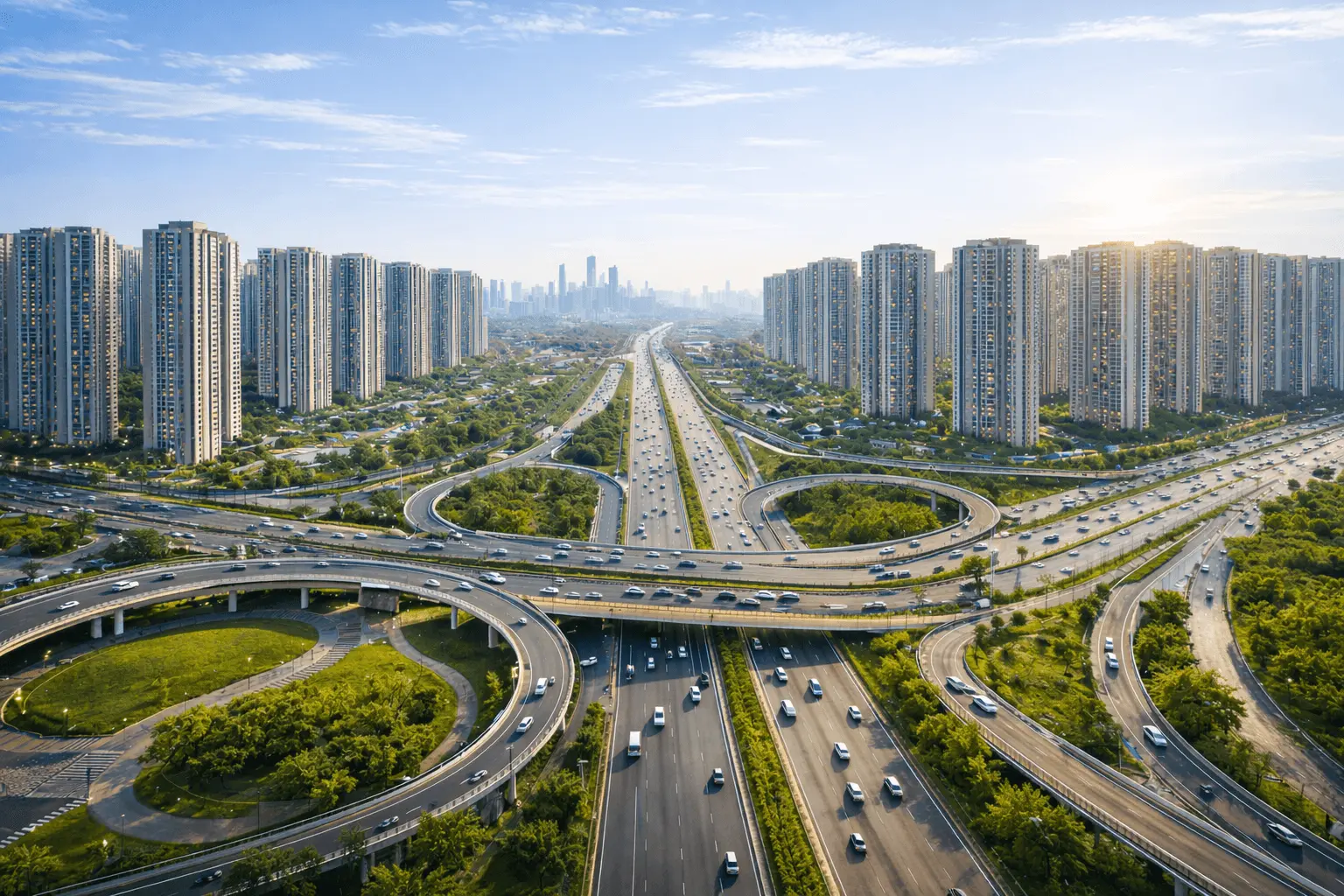
Dwarka Expressway, officially known as NH-248BB, is a 29 km long expressway connecting Delhi to Gurugram. It is a 16-lane expressway where 8 lanes are elevated and grade-separated, and the remaining 8 lanes serve as service roads at ground level. Of its total length, 18.9 km lies in Haryana and 10.1 km in Delhi. The expressway starts from Shiv Murti on NH-48 in Delhi near IGI Airport and ends near the Kherki Daula Toll Plaza in Gurugram. Running parallel to the older and heavily congested Delhi–Gurugram Expressway (NH-48), it was built to provide a faster, signal-free alternative route between the two cities.
The expressway connects Delhi's Dwarka directly to Gurugram, covering some of the city's most rapidly developing sectors including Sectors 36A, 36A, 36D, 83, 84, 85, 86, 88, 88A, 88B, 99, 100, 101, 102, 103, 104, 105, 106, 109, 110, 110A, 111, 112, and 113, making it a key corridor for both residential and commercial growth in the region.
History of Dwarka Expressway
2006: Conception The entire Dwarka Expressway project was conceived in 2006 with a planned cost of ₹7,500 crore. Land acquisition began in 2007-08, and the construction contract was awarded to JSR Construction Private Ltd and India Bulls Private Ltd in April 2011, with an initial completion deadline of 31 March 2012.
2011–2016: Early Construction & Delays Out of the original 18 km route, only 14 km were completed by 2016. Land acquisition issues caused major delays over several years. The project was later acquired by the National Highways Authority of India (NHAI), and the road was officially renamed National Highway 248-BB in June 2016. The scope was also expanded to include the Central Peripheral Road (CPR) and a 6.3 km section of Urban Extension Road-II (UER II).
2018: Land Issues Resolved HUDA faced difficulties handing over land to NHAI due to pending court matters involving displaced residents. On 28 May 2018, the Punjab and Haryana High Court directed HUDA to allot alternate houses to 72 displaced residents within two weeks, allowing construction to move forward. The Prime Minister's office intervened in November 2018 to resolve remaining issues, and all land-related matters were settled by end of 2018.
2019: Construction Revived On 8 March 2019, Union Minister Nitin Gadkari laid the foundation stone after most construction contracts had already been awarded.
2024–2025: Inauguration & Completion In March 2024, Prime Minister Narendra Modi inaugurated the partially completed 18.9 km stretch in Haryana. The entire expressway became fully operational in June 2025.
Construction of Dwarka Expressway
The expressway was built in five packages from north to south.
Phase 1 : Mahipalpur Shiv Murti to Bijwasan Railway Station (5.1 km, Delhi) Package 1 (Delhi Section) is constructed by J Kumar Infraprojects (JKIL). This segment covers a 5.3 km to 5.9 km stretch in Delhi, running from the Shiv Murti (Mahipalpur) on NH-48 to the Bijwasan Road Underbridge (RUB) near Dwarka Sector 21. It includes an 8-lane configuration deep tunnel spanning 3.5 km that runs under the airport runway, constructed at a cost of ₹1,000 crore.
Phase 2 :Bijwasan Rail Underpass to Delhi–Haryana Border (4.2 km, Delhi) This elevated section runs from the Bijwasan rail underbridge to the Delhi–Haryana border at km 9.5 of the expressway.
Phase 3 : Delhi–Haryana Border to Basai Railway Overbridge (10.2 km, Gurugram) This elevated dual carriageway of 4 lanes each passes through Sectors 102, 103, 104, 105, 106, 109, 110, 111, 112, and 113 in Gurugram. A 4-lane service road runs beneath the main carriageway.
Phase 4 : Basai Rail Overbridge to Kherki Daula Toll Plaza (8.77 km, Gurugram) Built at a cost of ₹1,333 crore and constructed by Larsen & Toubro Ltd, this package includes an 8-lane elevated main carriageway, a Trumpet Interchange for Manesar Road, and a Cloverleaf Interchange at the NH-8-SPR intersection. It also includes minor bridge widening, additional rail overbridges, five vehicle underpasses, six bus bays with shelters, and four junction improvements.
Phase 5 : Shiv Murti to IGI Airport Terminal 3 (1.5 km, Delhi) A 4-lane shallow tunnel built at a cost of ₹350 crore, running east to west from Shiv Murti directly to Terminal 3 of the Indira Gandhi International Airport.
Current Status of Dwarka Expressway
June 2025: Fully Operational The entire route of the Dwarka Expressway, from Shiv Murti at Mahipalpur to the Kherki Daula Toll Plaza, was completed and made fully operational in June 2025.
Future Extension: There is a plan to further extend the expressway by building an 18 to 20 km long tunnel from Shiv Murti to the Sarai Kale Khan Multi-Modal Transport Hub, which would significantly improve connectivity deeper into Delhi.
Connectivity of Dwarka Expressway
Existing Connectivity
At the northern end in Delhi, the expressway connects to the Urban Extension Road II (UER II / NH-344M), IGI Airport, the Delhi–Gurugram Expressway (NH-48), and the Delhi Metro NCR suburban rail network.
At the southern end in Gurugram, it connects to NH-48, which further links to the Western Peripheral Expressway (WPE), RRTS Delhi NCR regional rail, and the Kherki Daula ISBT bus terminal.
Through the Western Peripheral Expressway, it further connects to the Haryana Orbital Rail Corridor, Eastern Peripheral Expressway, Delhi–Mumbai Expressway, Delhi–Amritsar–Katra Expressway, Delhi–Faridabad Skyway, and the DND Flyway.
Also Read: Yamuna Pushta Elevated Corridor
Future Connectivity
An elevated highway is planned from 11 Murti Circle via INA Colony and Vasant Kunj to the Gurugram–Faridabad Road near Bandhwari and Ghata. This will serve as the third major highway corridor between Delhi and Gurugram, in addition to NH-48 and Dwarka Expressway.
The Delhi–Jaipur SuperExpressway (NH-352B) is a greenfield 6-lane, 195 km expressway under construction at a cost of ₹6,530 crore. Starting from Kherki Daula, it runs parallel to the western side of NH-48 and ends at Chandwaji on the northern outskirts of Jaipur. It will cut the Delhi–Jaipur distance by 40 km and reduce travel time to around 2 hours.
A Gurugram Heli Hub is also planned in Sector 84 near Global City off the Dwarka Expressway. Funds were allocated in the Haryana Budget for FY2025-26 to develop a 16-acre heliport that will offer direct helicopter connectivity to IGI Airport, Salasar Balaji Temple, Khatu Shyam Temple, Chandigarh, and other destinations.
Economic Impact of the Dwarka Expressway
The Dwarka Expressway has emerged as one of the most important economic corridors in the Delhi–NCR region. By improving connectivity between Delhi, Gurugram, IGI Airport, and major business districts, the expressway has boosted commercial activity, attracted new investments, and accelerated real estate development along its route.
The corridor is expected to play a key role in the growth of major developments such as Global City Gurgaon, Yashobhoomi (India International Convention & Expo Centre), logistics hubs, and commercial business districts. Enhanced connectivity to NH-48, UER-II, and other regional expressways has strengthened the region's appeal for businesses, developers, and investors.
The expressway has also driven demand for residential, office, retail, and warehousing projects, creating employment opportunities and supporting long-term economic growth. As infrastructure continues to expand around the corridor, the Dwarka Expressway is set to remain a major catalyst for development across Delhi and Gurugram.
Also Read: Ganga Expressway: Route Map, Key Cities & Current Status
FAQs
Q1. How long is the Dwarka Expressway?
The Dwarka Expressway is approximately 27.6 km long, connecting Shiv Murti in Delhi to Kherki Daula in Gurugram.
Q2. How many lanes are there on the Dwarka Expressway?
The Delhi–Gurgaon Expressway has 16 lanes in total, including 8 elevated lanes for fast-moving traffic and 8 ground-level service lanes for local traffic.
Q3. How much is the cost of the Dwarka Expressway?
The Delhi–Gurgaon Expressway was built at an estimated cost of ₹8,662 crore. The project was completed in phases and became fully operational in June 2025.
Q4. Is there a speed limit on the Dwarka Expressway?
The speed limit on the Dwarka Expressway is 80 km/h for cars and 60 km/h for commercial vehicles.
Q5. What are some of the benefits of the Dwarka Expressway?
The Delhi–Gurgaon Expressway has significantly improved transportation and connectivity between Delhi and Gurgaon. It has reduced travel time, eased traffic congestion, and provided smoother access to major residential, commercial, and industrial areas. The expressway also enhances connectivity to key developments such as Global City Gurgaon and surrounding industrial hubs, supporting trade, business activity, and economic growth across the region.
Q6. What is the toll price on the Dwarka Expressway?
The Dwarka Expressway features a 22-lane toll plaza with a fully automated toll collection system. Toll charges vary by vehicle type, with private cars charged ₹85, light commercial vehicles and mini buses charged ₹120, and buses, trucks, and multi-axle vehicles charged ₹250. Toll collection is carried out electronically through the FASTag-enabled system, ensuring smoother and faster traffic movement.
Q7. When was the Dwarka Expressway completed?
The Dwarka Expressway was completed in phases, with major sections opening in 2024. The entire 27.6 km expressway became fully operational in June 2025, providing seamless connectivity between Delhi and Gurugram.
Q8. What is the starting and ending point of the Dwarka Expressway?
The Dwarka Expressway starts at Shiv Murti in Delhi, near the airport area, and ends at Kherki Daula in Gurugram, where it connects with NH-48.
Q9. How much travel time does the Dwarka Expressway save?
The Dwarka Expressway significantly reduces travel time between Delhi and Gurugram. Depending on traffic conditions, it can cut journey times by 20–30 minutes compared to traditional routes, while also easing congestion on NH-48.
Q10. Which sectors are located along the Dwarka Expressway?
The Dwarka Expressway connects Dwarka in Delhi with Kherki Daula in Gurugram. Key sectors along the corridor include Dwarka Sectors 21–27 in Delhi and Gurugram Sectors 36A, 37D, 99, 102, 103, 104, 106, 109, 111, 112, 113, and 114. These sectors have become major hubs for residential and commercial development.